
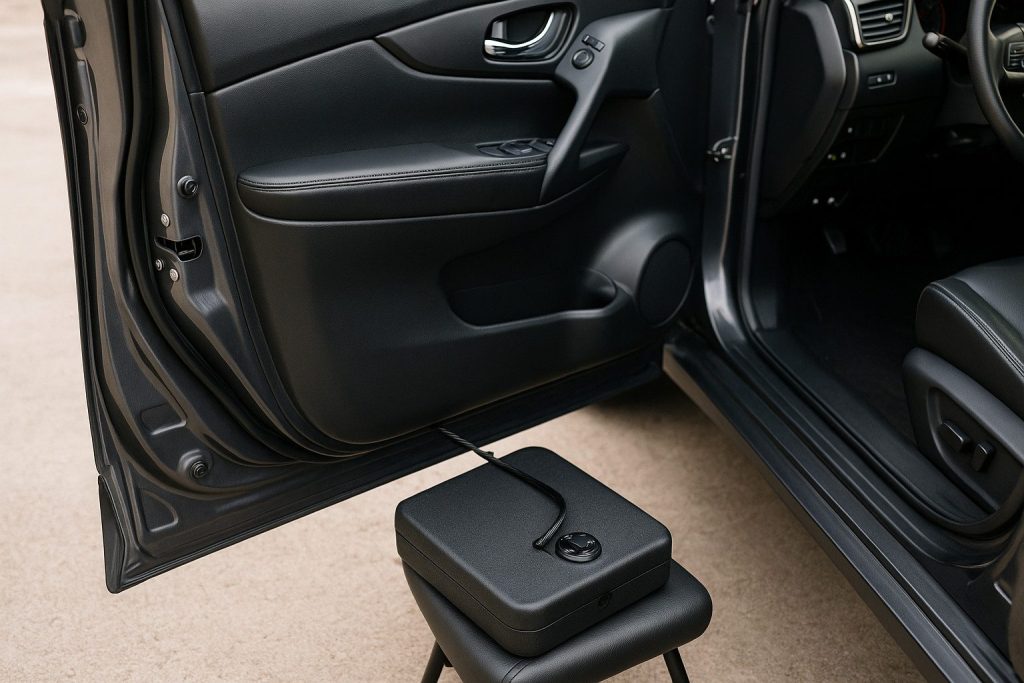
Every gun owner has faced the dilemma: you’re heading into a store, restaurant, gym, or workplace where firearms aren’t allowed. Leaving your gun in the car feels quick, convenient, and harmless.
But that convenience comes with a cost.
Vehicle firearm thefts are skyrocketing across the country—and Texas continues to be one of the highest-ranked states for guns stolen out of vehicles. Most thefts happen in “safe” areas, in broad daylight, and usually involve firearms that were left unsecured inside a glovebox, console, or under a seat.
If you take firearm ownership seriously, it’s essential to understand why your vehicle is one of the worst places to store a firearm—and how to protect your gun, your community, and your peace of mind.
A vehicle may feel secure, but it offers very little real protection. Even with alarms, cameras, or a locked door, a determined thief can break into your vehicle and be gone in 60 seconds or less.
They know many gun owners leave firearms in cars.
Windows are easy to break and offer instant access.
The first places thieves check are gloveboxes, center consoles, and under seats.
Parking lots—especially gyms, restaurants, and workplaces—provide endless opportunities.
A stolen firearm can enter the criminal world in hours. One moment of convenience can lead to devastating consequences.
In Texas, it is legal to have a firearm in your vehicle, but legal does not always mean wise.
Being held liable if your negligence contributes to a theft.
Facing civil implications if the stolen firearm is used in a crime.
Violating state-specific storage or access laws in other states.
Putting minors or unauthorized persons at risk if the firearm isn’t secured.
Even if the law permits in-vehicle storage, moral responsibility still rests on the firearm owner.
A stolen firearm isn’t just property—it’s a weapon now in the hands of someone who shouldn’t have it.
If you must leave a firearm in your vehicle temporarily (not regularly), follow these responsible practices to reduce risk:
Look for:
Steel lockbox
Reinforced locking mechanism
Steel cable anchored to the seat frame
Avoid cheap, plastic, or lightweight “safes”—experienced thieves can pry them open in seconds.
Visibility invites theft.
Never store a firearm in the glovebox or center console.
Place a locked safe under the seat or in the trunk.
Reduce opportunities by choosing well-lit, high-traffic areas to park.
For temporary storage:
Keep the firearm unloaded.
Store ammunition separately.
Always double-check the chamber before locking the firearm away.
This is the #1 safest method.
Even short stops—gym workouts, grocery runs, coffee shops—offer enough time for theft.
Your home safe provides the controlled environment a firearm requires.
Scripture teaches us about stewardship and trust:
“Whoever can be trusted with very little can also be trusted with much.” — Luke 16:10
As Christian gun owners, our responsibility doesn’t stop with how we shoot—it continues with how we store, secure, and protect our firearms. Choosing responsibility over convenience reflects wisdom, maturity, and care for our community.
At Faith First Firearms, we help gun owners honor their rights by practicing safe, responsible stewardship every day.
This content is provided for general educational purposes and is not legal advice. Firearm laws and regulations may change and can vary by jurisdiction. Verify current federal, state, and local requirements before acting.
Our articles are written and reviewed by the Faith First Firearms Editorial Team. We cite primary sources where a claim depends on one, we say plainly when a question falls outside what we can answer, and we route legal, medical, and instruction questions to people qualified to answer them. Faith First Firearms does not provide firearm training.
Faith. Safety. Responsibility.

Prefer personal guidance on ownership, transfers, or your first purchase? Book a consultation.

You have told us that you are under 18 years old, so we are not able to give you access to this site.
If you would like to learn about firearm safety and responsible ownership, Project ChildSafe offers free educational resources:
I confirm that I am at least 18 years old.